Other Bradford on Avon Schools

British School
Opened in 1848 at Mount Pleasant in union with the National Society. The Infants school was built in 1879. It changed from an elementary school and re-opened as a junior school on 1st January 1928. In 1956 the school moved to its present site and an infants school was built on an adjacent site. In 1972 both became a Church of England Voluntary Controlled Primary School. This is one of the original buildings.
From 1854 at The Old Church House in Church Street (shown here). A new school was built in Mason's Lane and opened in November 1874. The school was was finally closed on 8th April 1925 and the pupils transferred to the new county council junior school (the present Fitzmaurice Primary School)
Site of the British Girls School (1854 - 1874)
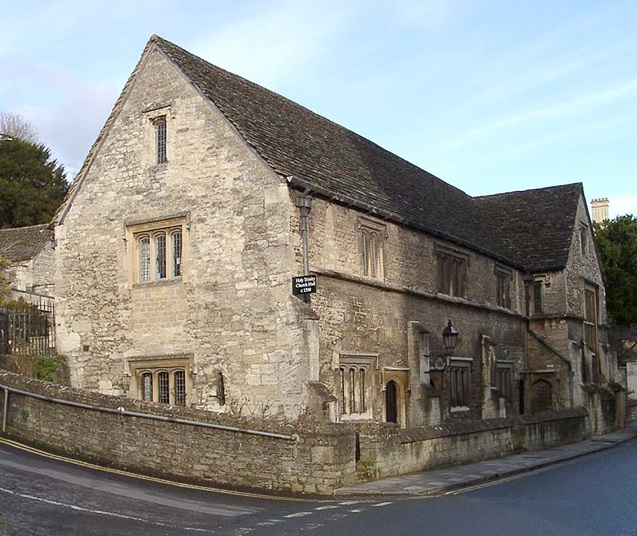
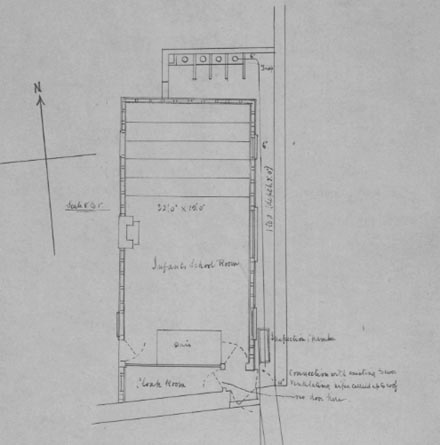
Floor plan of the British Girls School (1854 - 1874)
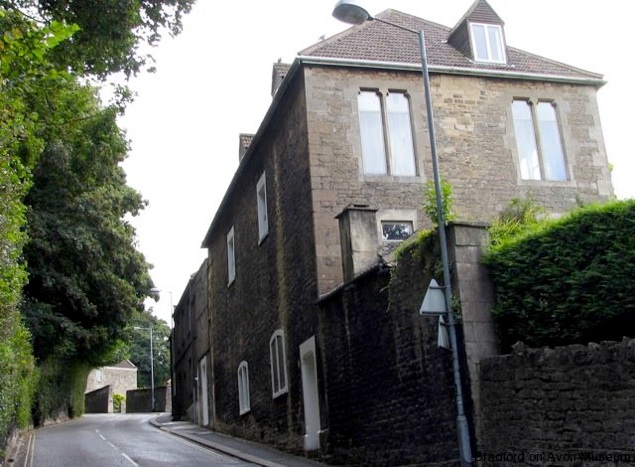
The Free Grammar School
The first recored school in Bradford on Avon or ‘Great Bradford’ as it was also known dates back to 1524 provided by a priest of Thomas Horton’s charity until that charity’s dissolution in 1540. Education was for boys only and instruction focussed on the scriptures exclusively.
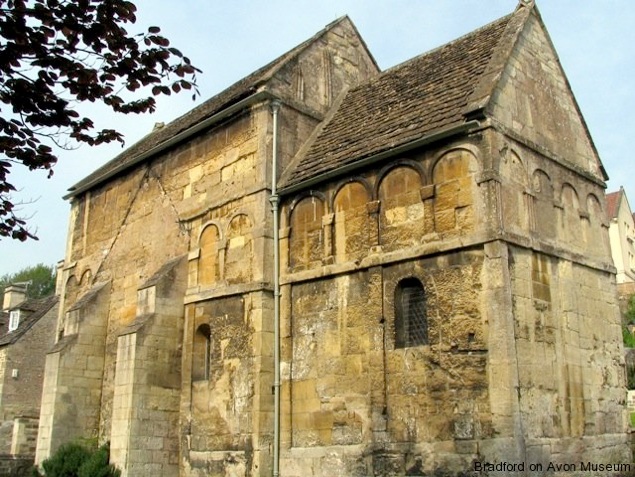
Rents on some pieces of land were given over by Edward Norton [Horton?] to support the foundation of a Grammar School in Bradford as long ago as 1584, but Bradford’s Free Grammar School was only set up, by Rev John Rogers in an old building near the church, in 1712. This building was recognised as the Saxon Church in 1856 and the school was moved to part of the Church Hall in 1874 when its restoration began. It was performing badly by the end of the 19th century and was wound up in 1903.
Site of the Free Grammar School (1712 - 1874)
The Church of St Laurence otherwise known as the Saxon Church.
The British and Foreign School Society set up a non-denominational school in 1817 in the building in part of what is now St Margaret’s car park that had formerly been the Quaker Meeting House and had already been used as a school from 1806. This ‘British School’ was soon teaching up to 200 pupils. A British School for girls was opened in the old Church House, Church Street 1854 to 1874.
British School for Girls
The undenominational school
The condition of the school building in St Margaret’s and its surroundings amid factories became increasingly bad and the British Society did up a former woollen cloth mill on Mason’s Lane that had been burnt down in 1869. This was opened as an ‘Undenominational School’ for infants and girls in 1874 and, with closure of the old school, the boys were moved there too in 1880. It closed in 1924 after its landlord had given notice to quit and a new non-denominational County School was built.
The Undenominational School (1874 - 1924)
christ church national school
Christ Church National School was opened by the Anglicans at Mount Pleasant, next to the recently built church, in 1847. The original building was paid for by Captain Septimus Palairet, who was instrumental in bringing the rubber industry to Bradford in the following year. An infants school was added to the site in 1878, again privately paid for, this time by Miss Isabella Poynder of Leigh House. A new school, currently with about 400 pupils, was built nearby in 1956 and the Juniors moved there. The old buildings housed the Infants until the mid 1980s when they moved over to join the Juniors on the other side of the church. The old buildings are now The Mount Pleasant Centre, a social club.
Christ Church National School from 1847 and Christ Church Infants School till the mid 1980s
County Junior mixed infants school
Christ Church Church of England Controlled Primary School (1956 - Present)
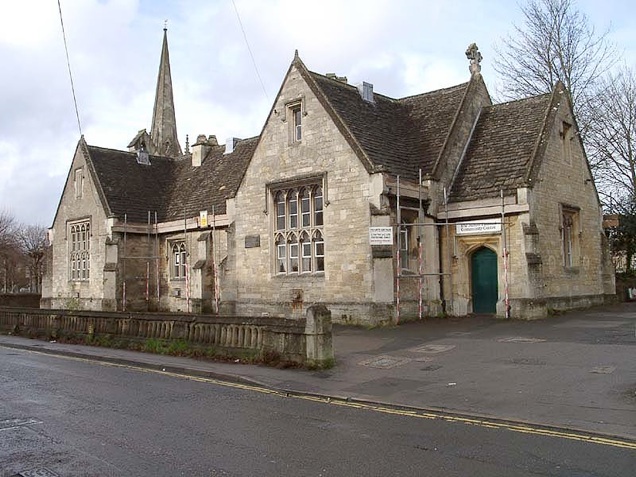
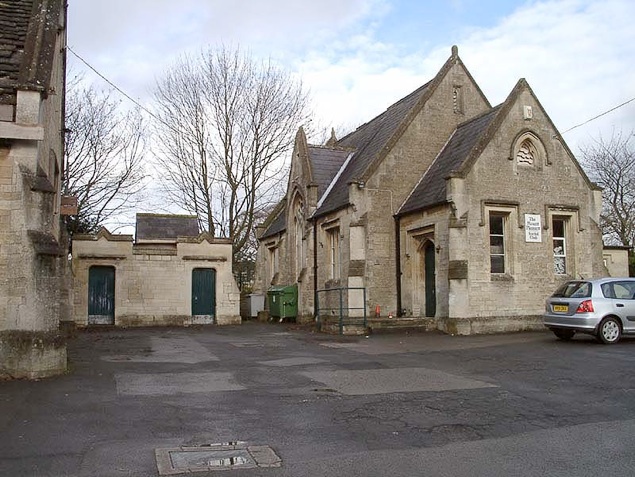
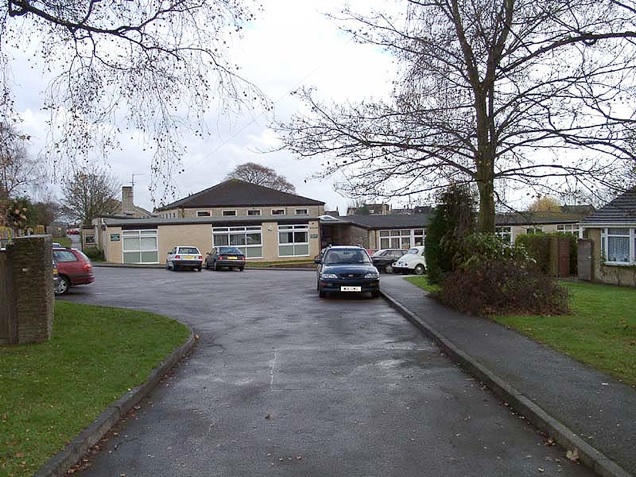
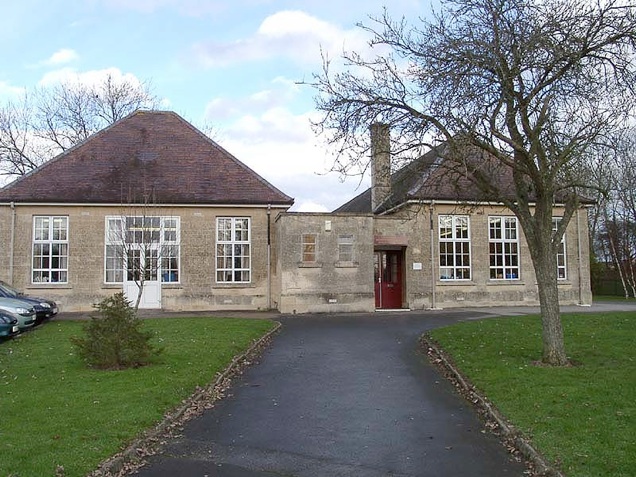
christ church COEC Primary School
A piece of land in Poulton Field, next to Trowbridge Road, was purchased in 1919 with the plan that the County Council would build a primary school there. The Council failed to build it until a petition and open meeting of the town demanded it, reinforced by the prospect of the Undenominational School becoming homeless. The County Junior Mixed and Infants’ School was built and opened in 1928. It was usually referred to a Trowbridge Road Primary School until it adopted the name of Fitzmaurice Primary School in 1985, after the Fitzmaurice Grammar School had closed next to it.
In the 19th century there were four elementary (all age) schools in Bradford; the British Boys’ School, Trinity National School, Christchurch National School, and the British Girls’ School. The British Boys’ School closed in 1880 but the others survived into the 20th century with the school leaving age rising from 11 in 1893 to 14 in 1918. By 1924 these schools were outdated and unsuitable for the 20th century. Also all the schools, other than the senior County School (later Fitzmaurice Grammar School) in Junction Road, were to the north of the river and a school for younger children was needed in the south. The County Council’s Director of Education proposed that there should be just two junior schools taking children up to the age of nine, after which they transferred to a senior school. This came about in 1928 when Trinity School became a senior school, the British Girls’ school closed, Christchurch became a junior and infants’ school and a new council school was opened on the Trowbridge Road.
The new school, opened on 1st January 1928, eventually became known as Fitzmaurice Primary School, but in earlier years was known as Bradford on Avon Council Junior Mixed and Infants’ School. The school comprised three classes of Infants and two of Juniors, with 55 boys and 50 girls on the register. Numbers increased quickly and when the school closed for the summer holidays in July there were 141 children. At this time the school holidays were very similar to those of the later 20th century, with two weeks at Christmas, two weeks at Easter, but only four weeks in the summer (increased to six by 1952). There were also three one-week half term holidays.
Methods of education changed with one example being that the children had been taught to write in the cursive style but now the infants were taught script writing instead. The New Beacon Method of Reading was also introduced. There were set timetables for each class and subjects taught included arithmetic, reading, writing, handwriting, history, geography, English, reciting and religious instruction. There was both written and oral work and other subjects included singing, dancing, raffia work, weaving on looms and physical training. A Percussion Band class was formed in 1935 and netball and country dancing was first introduced in the 1940s.
Lord Fitzmaurice of Leigh, who lived at Leigh House from 1890 until his death in 1935, aged 89, took a great interest in education in the town. He was the second son of the 4th Lord Lansdowne at Bowood, was Liberal M.P. for Calne for 16 years and later for North Wilts from 1898 to 1905, and chairman of Wiltshire County Council from 1896 to 1906. He was a fairly frequent visitor to the school and presented a piano and piano stool in March 1928. Each year, in September, he provided a tea for the school in the grounds of his house, now Leigh Park Hotel. The school honoured his name in July 1985 when the school became Fitzmaurice Primary School after Fitzmaurice Grammar School closed.
The school developed well during these early years and was described as a ‘happy family’ at a Religious Inspection in 1934. Apart from classroom lessons there were outdoor activities with nature rambles and walks for the Juniors, while the older children were allowed to help in the school garden in fine weather. There were also local visits including the cinema in Trowbridge to see such films as Palestine and The Prince of Wales World Tour in 1931 and Elephant Boy in 1938, and a visit to Kemp and Hewitt’s cloth mill in Trowbridge as part of their studies in spinning and weaving. The school gardens in front of the school and on the north side were extended in 1933, while trees and shrubs were planted on the bank, between the school and the playing field, in 1938 and 1939. In September 1933 a group of fathers dug out a pond, 12 children gathered clay to line it, and there was a day’s holiday while teachers and boys from the top form laid a cement lining.
Building work took place in 1935 and on 9th September two new classrooms were used for the first time, while new fittings were provided in the original rooms. The additional space meant that children could now stay at junior school until the age of 11 relieving the pressure on space at the senior schools. There were now five classes; Nursery, Infants, and Forms 2, 3 and 4. In 1938 the new top class had swimming lessons at the Baths, by the Town Bridge, once a week from 9.40 a.m. to 10.45 a.m. in the summer months.
The Second World War greatly affected both teachers and pupils with many absences and changes of staff. On 29th September 1939 the school closed for a Billeting and Emergency Procedures day; theory was put into practice in September 1939 when 80 evacuees and two teachers from Barking arrived at the school to use the spare classroom. Before that a census of all 159 children present in May was taken for gas mask provision. In September both local children and evacuees were taken to the nearby underground Quarry, designated as an air raid shelter, were prayers were said. A ‘milk in schools’ scheme was put into operation, replacing the Horlicks Malted Milk scheme of 1934.
From May 1940 air raid practice was carried out daily in the quarry, although in November it was decided that this was unsuitable and the school itself was strengthened with a baffle wall, wire netting over the windows and other means. The children raised money for the war effort including, £217 for War Weapons Week in April 1941, £500 (the target was £200) for Wings for Victory Week in May 1943, and £539 for Salute the Soldier Week in July 1944.
During the war the inaugural meeting of the Parents’ Association took place on 24th June 1942, with 25 parents and three school managers present. To raise money for the School Fund they held a whist drive and rummage sale, while on August Bank Holiday the School Fete, opened by Mrs John Moulton and with the RAF Band, was attended by 1,500 people and raised £82. From 1944 the P.T.A. provided the tea at the annual Christmas Party and organised other events, such as a sale of work in 1946 and a Christmas Gift Sale in 1952. Parents were involved in the school in other ways. There was an annual Parents’ Afternoon from December 1932, with recitations, songs and playlets, while on 3rd December the first Speech Day was held at the Town Hall with visitors, staff, managers and members of the P.T.A. taking tea at the Swan afterwards. The top class presented a Nativity play, but did get tea at the Swan. After the war Parents’ Afternoons were replaced by Open Days and the school fete became an annual event.
At the annual sports day children competed for their houses, St. George, St. David, St. Andrew and St. Patrick, and some went on to compete in the district and county sports. From 1949 the annual carol service was held jointly with Christchurch. In January 1949 work began to close up the open corridor that ran along the side of the school. In 1953 for the Coronation each child received their Coronation Mug and a commemorative birdbath was bought for the school.
When Fitzmaurice Grammar School closed in 1980 one block of classrooms was transferred to this school which, in July 1985, became Fitzmaurice Primary School thus preserving the name of Lord Fitzmaurice in the town.
Mobile classrooms were added to accommodate the increasing number of children in the school over the years. In 2003/4 these were replaced by permanent buildings when the school was extended. The position of the main entrance was also changed and a new reception area made. New offices and toilets were built and classrooms that had opened out on to a common corridor were made into discrete rooms.
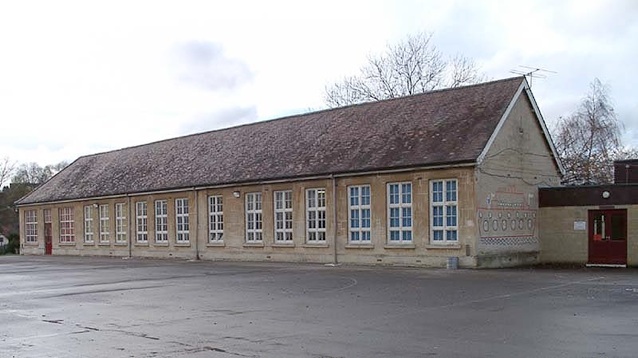
Trowbridge Road / Fitzmaurice Primary School (1928 - Present)
The Private Schools
There were private schools of various sizes which usually had a short life, often closing with the retirement or death of the teacher. Dr Knight was running one such in Bradford at the beginning of the 19th century. In 1817 it moved to South Wraxall Manor House and lasted until 1826.
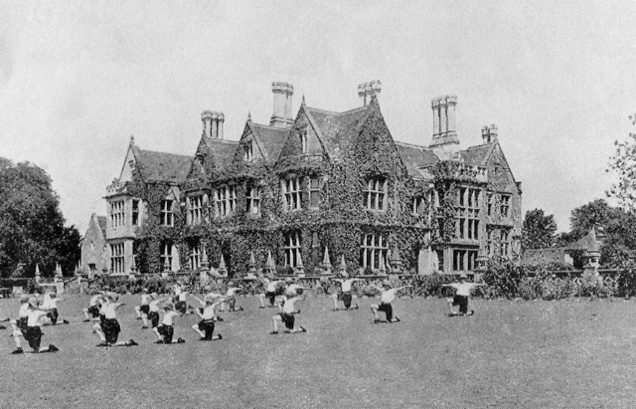
Boys exercising at Kingwell Court School, Frankleigh House
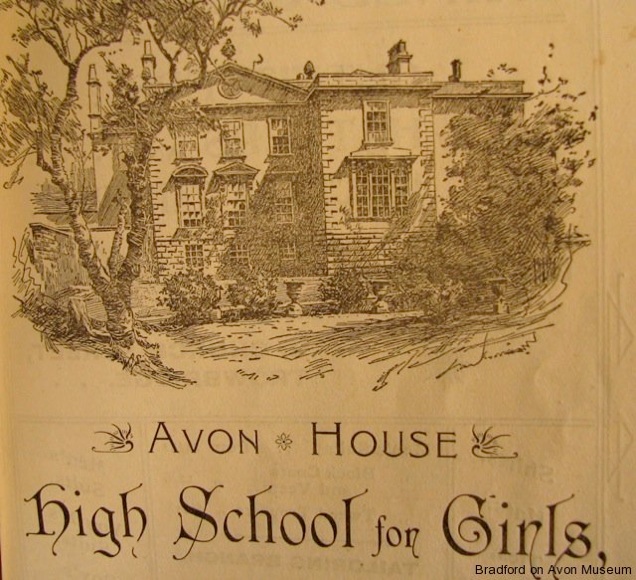
Avon House High School for Girls was a private venture that was to open in 1897, in the mansion in Kingston Road that was later taken over as offices by the Spencer Moulton rubber company. Miss Julia Blake, headmistress, became a teacher and vice-principal at Fitzmaurice Grammar School and the project was cancelled. The building was sold to the Spencer Moulton rubber company two years later.
Typical of many small home-based schools for private tuition was the one that was run by Miss Ella Venton at the house of her parents in the 1890s. She also advertised herself as “teacher of the pianoforte, terms moderate”.
Kingwell Court Preparatory / The Old Ride School
A private grammar school was operating near Frankleigh House on the Bath Road in 1871. In the 20th century Kingwell Court Preparatory School was set up in the building as a boarding school for boys. In 1959 it merged with a school which had moved from Little Horwood, Buckinghamshire under the name of the Old Ride School. The Old Ride closed in 1990 and was replaced for a few years by a special needs school and by the Rudolf Steiner Orchard School. Frankleigh House has now been divided into flats.
The Cockrom School
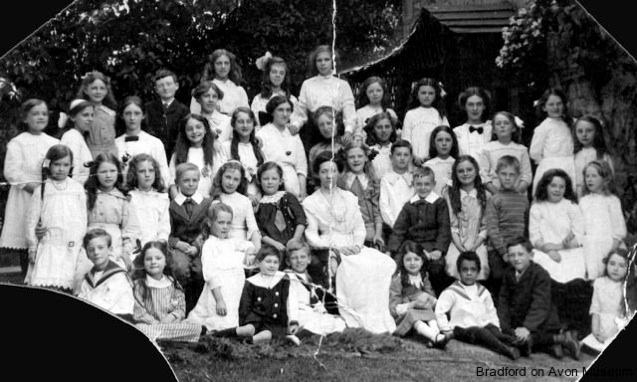
Miss Mabel Cockrom and her pupils
Miss Mabel Cockrom (who died in 1938) ran a preparatory school for boys and girls at her house, 28 St Margaret’s Street, between 1895 and 1932, at sometime assisted by her brother Percy. She educated several of the prominent families from the southern side of the town, including the Uncles and Gerald and Angela, the children of the chemist Richard Christopher.
Avon House High School for Girls
Typical of many small home-based schools for private tuition was the one that was run by Miss Ella Venton at the house of her parents in the 1890s. She also advertised herself as “teacher of the pianoforte, terms moderate”.
Miss Venton School for Young Ladies
Avon House School, Kingston Road
This web site is for historical / entertainment purposes only and is in no way an official site of any of the institutions described here.

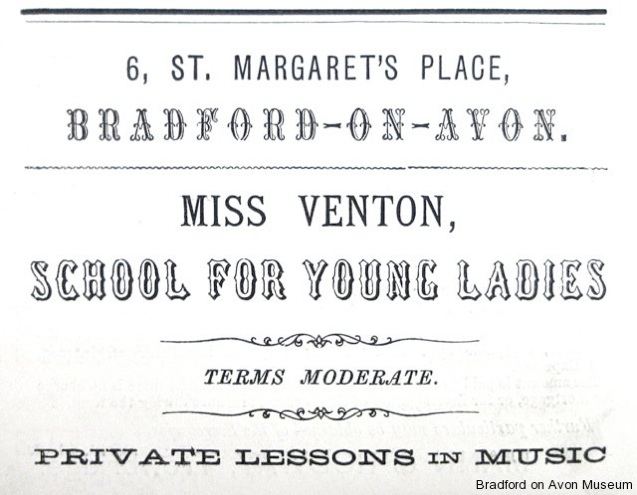
Miss Venton School Advertisement 1887
Photographs from Wiltshire District Council and Bradford on Avon Museum unless attributed otherwise